
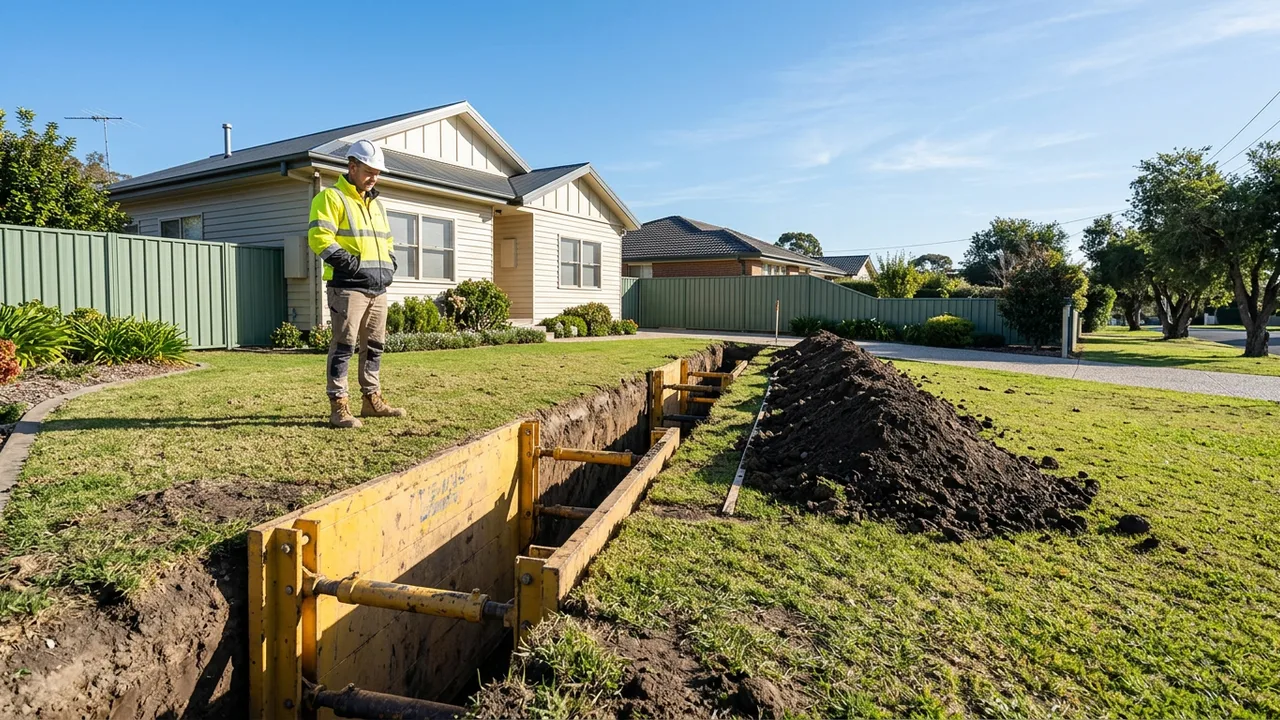
Trenching in Toowoomba for Drainage, Water and Power
Need trenching in Toowoomba for a drain, a water line or power to the shed? A trench cut to the right depth and line leaves far less of your yard to repair.
A trench is a narrow, straight cut that holds a pipe or cable at the depth it needs. A good operator keeps the cut tight, stacks the soil to one side and puts it back in layers, so the lawn and paths around the run stay in one piece.
Trenching in Toowoomba: drainage, water and power runs
For most yard runs, an open trench is the simplest and cheapest way to get a pipe or cable from one point to another underground. The job is simple to describe and easy to get wrong, because depth and fall matter more than speed.
Stormwater pipes need a gentle, even slope so water keeps moving. Power conduit needs to sit at a depth the electrician is happy with. Water lines need room around them so the plumber can join them properly.
Ground decides how the dig goes. On a sloping Toowoomba block, clay can sit in one corner and rock in another, which changes the depth, the fall of the trench floor and how fast the machine works. Clay holds water and sets hard when dry, while rock slows the machine. The contractor looks at your yard before pricing the run, whether it is in East Toowoomba, Newtown, North Toowoomba or elsewhere across the city.
When a trench is part of grading and site preparation
Many trenches sit inside larger earthworks. A new shed might need a levelled pad, a power run and a stormwater line to the street. A pool dig might need a drain trench beside it.
Doing these together means one contractor, one set of machine visits and one tidy-up. It also means the levels agree. A drain trench dug before the pad is finished can end up at the wrong height once the ground is cut or filled.
If a retaining wall cut or house pad is coming, say so up front. The trench line can then be planned around the final ground level.
Which excavator or skid steer digs the trench?
A skid steer, often called a bobcat, is a compact machine that fits through side gates and tight backyards. With a trenching attachment it cuts a narrow, neat channel, which suits shallow drainage and power runs.
A small excavator digs deeper and wider. It suits sewer connections, long stormwater lines and trenches through harder ground. Bigger excavators and tipper trucks come in when a lot of soil has to leave the site.
So access is the first question. A gate narrower than the machine or an overhead power line over the route changes the plan.
Will the trench wreck my lawn and driveway?
Some disturbance is part of any trench, but most of the damage is avoidable. Rubber tracks or careful routing protect lawns. Topsoil and turf can be lifted and set aside, then laid back on top.
A trench under a driveway is harder. Cutting through concrete or a sealed surface means repair afterwards, so boring or running the line around the edge is sometimes the better choice.
The backfill matters as much as the dig. Soil returned in layers and compacted settles evenly. Loose fill dumped in one go sinks into a shallow groove after the first heavy rain.
What drives the cost of trenching?
Length, depth and ground decide most of the price. A long, deep trench through rock costs more than a short, shallow one through soft soil, because the machine works slower and wears faster.
Access comes next. Barrowing spoil out by hand or working around fences and trees adds time. Spoil removal is the third piece, since carting soil away needs a truck and a tip.
A written quote based on your actual site sets the scope of the job. Queensland domestic building work can need a written contract, and you can look up the contractor's licence on the QBCC register before agreeing.
Digging near underground services
Buried power, water, gas and data lines are the main risk in any yard. Hitting one is dangerous and expensive, so existing underground services are located before the machine starts.
Where a line may be close, the operator digs carefully by hand at that spot.
If anyone strikes a gas line or electrical cable, stay clear and call 000.
Got a drain, water line or power run to get underground? Say where it starts and finishes, what is buried along the way and how wide your side gate is when you request a project review. The narrowest point between the street and the trench line often decides which machine can do the job.
How it works
-
Look at the ground
The contractor walks the run, notes the slope, access width and soil, and works out where existing lines might sit.
-
Set depth and line
The plumber or electrician's required depth sets the trench floor, and the route is marked on the lawn.
-
Dig and grade
The machine cuts the trench with the topsoil kept separate, and the base is trimmed to the fall the pipe needs.
-
Lay and backfill
Once the pipe or conduit is in, soil goes back in layers and is compacted so the run does not sink later.
-
Clean up
Surplus spoil is carted off and the surface is left level for turf or paving.
Scope in detail
- Stormwater and drainage runs Pipes need a steady fall away from the house, so the trench floor has to be graded before anything goes in.
- Water and plumbing lines A plumber can only connect what sits in the ground at the right depth and in the right place.
- Power and data conduit An electrician needs a clear, straight path to the shed, pool equipment or new outbuilding.
- Trenches beside footings A cut close to a wall has to stay clear of the footing edge so the dig does not undermine it, and the floor still needs its fall away from the house.
- Spoil carted away A long trench can lift more soil than most people expect, so the quote should say whether tip fees and truck runs are included or charged separately.
Trenching options
- Drainage trenches Usually a wider cut from a small excavator, because the pipe needs room and a graded floor.
- Water and power trenches Often a narrow, shallower channel from a skid steer with a trenching attachment.
- Boring under driveways and paths Boring pushes a line underneath instead of cutting through concrete or pavers, which saves a repair when the surface is sound and the run is short.
- Spoil removal A tipper truck takes the excess soil, clay and rock off the block once the pipe or cable is in.
Trenching across Toowoomba
Frequently Asked Questions
Water is getting in along my footing. Does someone have to dig outside to fix it?
What size machine suits a backyard trench in Toowoomba?
Will a small excavator fit through my side gate for a trench?
Get it priced
Block not level or ground in the way of your build? Tell us about the job and get it moving.
Share the details and we will help you take the next step with confidence.