
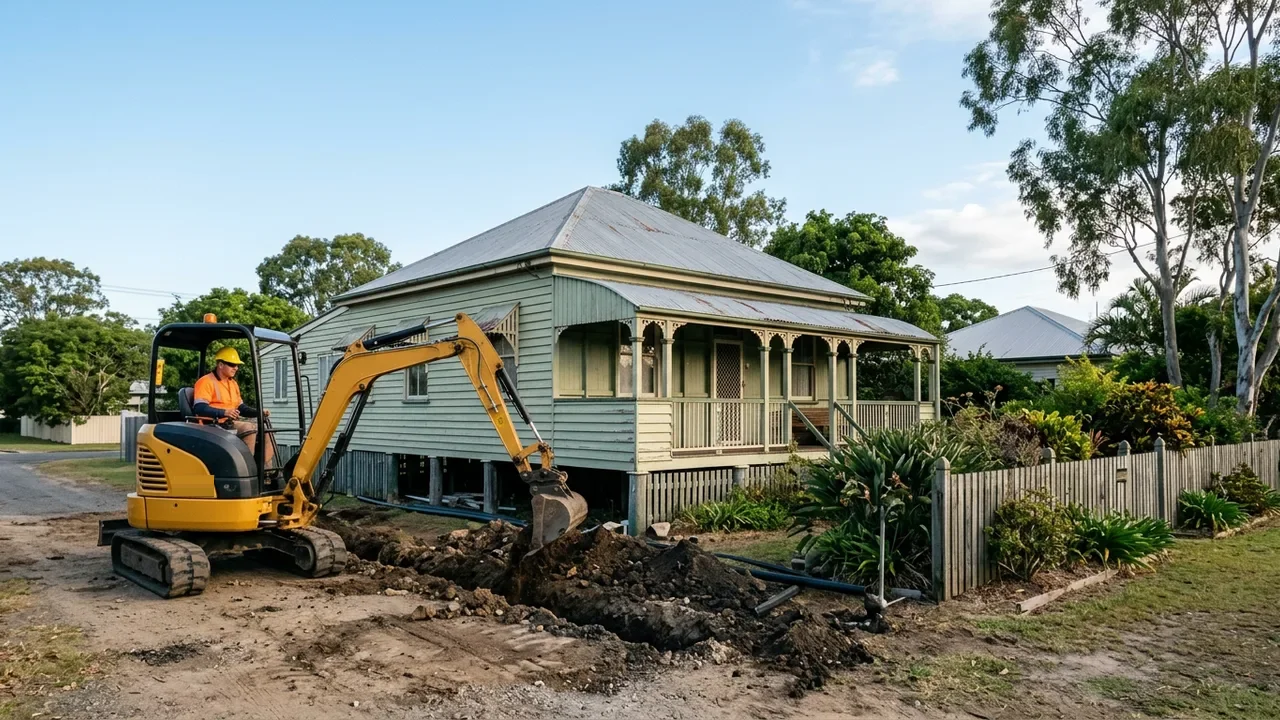
Earthworks in Drayton for New Homes and Knockdown Rebuilds
Old footings, rock and spoil are what push earthworks in Drayton over budget on a rebuild. Get the pad priced properly before the slab crew is booked.
On a knockdown rebuild, the job starts with the old footings, slab and garden beds coming out, and that is where rock, old drains and spoil costs can push a budget out. An independent earthmoving contractor who works around Toowoomba strips the site, cuts and fills it to the right levels, and trucks away the soil and rubble that has to go. The pad is the cleared, levelled and compacted ground your slab sits on. Once it meets the plans and any required checks, the builder can go ahead with formwork.
Earthworks in Drayton: pads, site prep and spoil removal
Three jobs make up most of the work on a new home or rebuild. Site clearing takes out old fencing and rubble, then topsoil stripping removes the soft top layer that cannot carry a slab. Cut and fill moves earth from the high side of the block to the low side until the pad sits at the height the plans call for. Compaction then packs that ground in layers to reduce the risk of settlement beneath the slab.
On the older cottage lots around Brisbane Street, the clearing stage tends to take longer. A block that has carried a house for decades can hold old footings, paths, garden walls and mature roots, and all of it has to come out before levels can be set. A bare newer lot skips most of that and moves straight to cut and fill.
The contractor looks at the plans and the slope first, then says what machines the job needs and what it will cost.
House pads and shed pads: what the excavator does
An excavator is the main machine for digging, trenching and shaping a pad. It digs out the cut side, loads trucks and cuts the edges and footing lines the builder marks.
House pads need tighter tolerances than most work, because a slab that is out of level costs the builder time. Shed pads are simpler, but the ground still needs a slight fall so water runs away from the slab, not under it.
If you only need a machine and an operator for a few days, say so. Hiring an excavator for a set job is priced differently from a full pad.
Spoil removal and disposal on a rebuild
Spoil is the soil, clay and rubble the job digs up that you do not want left on site. A knockdown rebuild produces a lot of it, because the old slab, footings and garden beds all come out before the new pad goes in.
Sometimes the spoil can be reused as fill on the same block, which cuts the trucking. Often it cannot, either because it is too wet, too full of roots or surplus to the levels. In that case it is loaded out and taken to a site that accepts it.
On a tight Drayton rebuild beside an established cottage, truck size and how far the machine can reach into the yard set how many loads leave the block. The quantity is what drives this part of the price, so the contractor estimates the volume and the number of truck loads before work begins.
Why compaction matters on filled ground
Fill that has only been tipped and levelled settles over time, and a slab above it can crack. A roller packs the fill in thin layers so it holds firm under the weight of the slab.
On a block that needs a lot of cut and fill, the compaction often takes as much care as the digging. Wet clay and loose rubble both pack badly, which is why the contractor picks what goes into the fill and what gets trucked away.
What if they hit rock or old pipes?
Rock, buried slabs and old pipes are the usual causes of a blown-out budget on a rebuild. The contractor sees what is there once the topsoil is off, and a good written quote spells out how rock work is priced, with spoil and rock on their own lines.
Older blocks can hold disused drains, tanks or footings from a previous house. Any earlier buildings or demolition on the block are worth mentioning so the contractor can price for them. Raise it before work starts, not after the excavator is already in the ground.
Drayton ground, access and older streets
Drayton sits on Toowoomba's south-western edge, where one of the city's oldest settled areas meets much newer suburban building. A newer lot is usually open and easy for trucks. An older lot may have a narrow drive, mature trees and fences close to the boundary.
Brisbane Street and Luck Street still hold early cottages and traditional detached houses, with the Royal Bull's Head Inn and Drayton Soldiers' Memorial Park close by. On a rebuild beside cottages like these, or near Drayton State School, the gap between house and fence usually decides which excavator fits and how big each truck load of spoil can be.
Anzac Avenue has commercial blocks among the homes and units, so a job there can sit right next to a business.
Old slab coming out or a block that falls away from the street? Mention any old slab, rock you have already hit or a tight side gate, because those details change the machine and the quote. Then request a project review.
Services in Drayton
- Trenching Trenches for stormwater, water and power dug to depth and line, with the yard around them left tidy.
- Swimming pool excavation Pool digs planned around machine access, rock and clay, with the spoil trucked off your property.
- Yard clean-up and spoil removal Leftover soil, rubble and spoil removed from the yard and carted off by tipper truck after the dig.
- House and shed pads Pads cut, filled and compacted to the levels your slab or shed needs, on suburban and rural blocks.
- Site preparation and levelling Topsoil stripping, rubble removal, cut and fill and grading take a block from rough ground to build-ready.
- Excavation and footings Footing and slab digs through local clay, rock and old fill, including blocks with tight side access.
- Driveway earthworks Driveways shaped, drained and laid with road base, gravel or bitumen so they stop washing out in storms.
- Retaining wall excavation The cut, set-out and drainage room behind concrete sleeper or sandstone block walls on sloping blocks.
Frequently Asked Questions
Can I do my own earthmoving and excavating on my Drayton block without a licence?
Get it priced
Block not level or ground in the way of your build? Tell us about the job and get it moving.
Share the details and we will help you take the next step with confidence.