
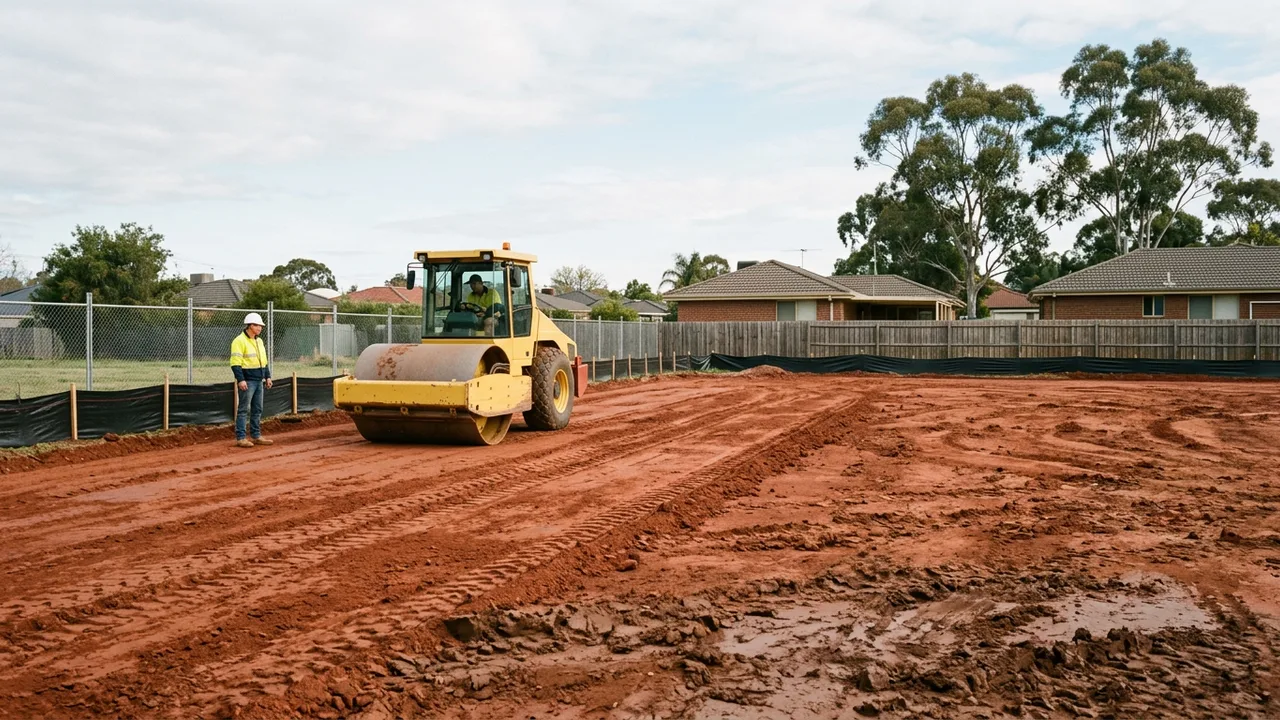
Site Preparation in Toowoomba
Your block is sloping, soft on top or littered with old rubble, and the builder needs it flat. Getting it ready means stripping the topsoil, clearing the rubble, cutting and filling the ground, and leaving a firm, level base.
Site preparation in Toowoomba is the work done to a block before anything is built, paved or planted on it. Sloping ground needs cutting and filling, and clay holds water after rain, so each stage sets up the next and the order matters. An earthmover who runs the stages in sequence hands the builder ground that is firm, level and at the right heights.
Site preparation in Toowoomba: why the order of the work matters
Compacting fill before the builder's heights are fixed can mean digging it out again. Stripping topsoil after filling leaves a soft layer buried under the slab.
A contractor first works out where the ground sits now and where the plans want it to end up. Everything else follows from that gap.
On a sloping block the cut on the high side runs deeper, and clay holds water after rain, so compaction waits until it dries. Rock inside a cut can call for a bigger machine or a breaker attachment, which changes both the method and the price.
Topsoil stripping and rubble removal
Site clearing on a building block means rubble: old slabs, broken concrete, old fencing and dumped fill. Buried concrete takes the most time, because it is broken up and loaded out.
Topsoil stripping comes straight after. Topsoil is the dark, organic layer that grows grass. It is soft, holds water and shrinks as it rots, so building on it invites cracks. A good operator stockpiles it for the garden beds. What cannot be reused is carted away.
Cut and fill, compaction and final grading
Cut and fill is how a sloping block becomes a flat pad. The excavator cuts into the high side and the soil is placed on the low side. Where the block has no spare soil, fill is trucked in.
Loose, dumped fill looks level on the day and then settles over the first wet season, taking a slab or driveway with it. Layered, compacted fill avoids that.
Final grading sets the surface to the finished heights with a gentle fall away from the building, which keeps water from pooling against walls.
What drives the cost of levelling a block
Four things move the price most. The first is how much soil has to shift, which depends on the slope. The second is the ground itself, since rock and heavy clay slow the machine more than loose soil.
The third is access. A wide open block lets a large excavator work quickly, while a narrow side gap means smaller machines and more handling. The fourth is where the spoil goes, because every truckload carted off adds to the job.
A written quote sets the agreed scope for the work, and the contractor looks at the site first so the quote fits your block.
Tight access and the right excavator
A machine can get into most backyards, but its size changes. Compact excavators and small tracked loaders fit through side gates and between a house and a fence. They take longer than a big machine, and the quote reflects that.
Steep or boxed-in blocks sometimes need spoil moved by barrow or small tipper to a truck waiting on the street. Ground mats and set routes help protect lawns and driveways.
Who site preparation suits
Owner-builders usually need the whole sequence, because nobody else is coordinating the heights. Homeowners with a builder already engaged often need only the pad and a clean finish to the builder's levels. A shed slab, a driveway or a pool base needs the same firm, shaped ground underneath.
Folding trenching or footings into the same visit saves paying to bring the machine in twice. You can look up a contractor's licence on the QBCC register before you agree to anything.
Mistakes that cost money on site
The costliest mistake is filling over topsoil or rubble and calling it done. The ground sinks, the slab cracks and the fix means digging everything up again.
Another is levelling before the builder's heights are fixed, since a pad out by a hundred millimetres can mean extra fill or a redesigned slab. A third is ignoring drainage, which shows up later as damp walls and soft ground.
Block falls away or full of rubble? Give your suburb, roughly how far the ground falls, what is standing on it and what you are building. Those details are what a cut and fill quote is built on.
How it works
-
Survey and set-out
Levels are taken across the block and the pad heights are marked from the plans. Pegs are placed outside the work area too, because the machine knocks out the ones inside it.
-
Rubble removal and stripping
Old slabs, broken concrete, dumped fill and topsoil come off the area that will carry the building or driveway, so nothing soft is left under the pad.
-
Cut and fill
An excavator and trucks move soil from high spots to low spots until the rough shape matches the plan. Levels are re-checked here, since stripping removes the first set of marks.
-
Compaction
Fill goes down in thin layers and each one is compacted before the next, which lowers the risk of the pad settling later. Wet clay is left to dry out first, as it packs poorly.
-
Final grade
The surface is trimmed to the finished heights and falls before the builder or concreter arrives. A last level check against the plan catches a high or low patch before concrete goes down.
Scope in detail
- Access looked at first The contractor looks at gates, side gaps and slope before quoting, so the machine suits the block and the price fits the job.
- Heights taken from the plans Pad levels come from the builder's drawings, so the finished surface matches what the slab designer expects.
- Falls for water The grade is shaped so rain leaves the block along a planned path, away from walls and neighbours.
- Loads leaving the site Clay, rock and rubble the block cannot reuse go out by truck, which leaves the yard clear for the builder.
Site preparation and levelling options
- Rubble removal Suits a block where old slabs, broken concrete, dumped fill or old fencing sit on the spot the building or driveway will take, with soft topsoil underneath.
- Cut and fill levelling Suits a sloping block, where the high side is cut away and the low side built up to a flat pad. The clay and rock in the ground decide how hard that cut is.
- Grading and site preparation for slabs Gives a shed, driveway or pool base the firm, shaped ground it needs before concrete or paving.
- Spoil removal Takes surplus clay, rock and rubble off a tight block after the dig so the yard is usable again.
Site preparation and levelling across Toowoomba
Frequently Asked Questions
When does Toowoomba Regional Council require approval for cut and fill?
What is operational work under the Planning Act?
How does an earthworks project work from survey to completion?
Get it priced
Block not level or ground in the way of your build? Tell us about the job and get it moving.
Share the details and we will help you take the next step with confidence.