Toowoomba Earthmoving Companies for Pads, Trenches and Driveways
Finding earthmoving companies in Toowoomba is easy, but getting one onto your block before the builder's slab date is the hard part. If your ground needs cutting, levelling, trenching or draining before the next trade can start, a local contractor with the right machine and a written price is the way forward.
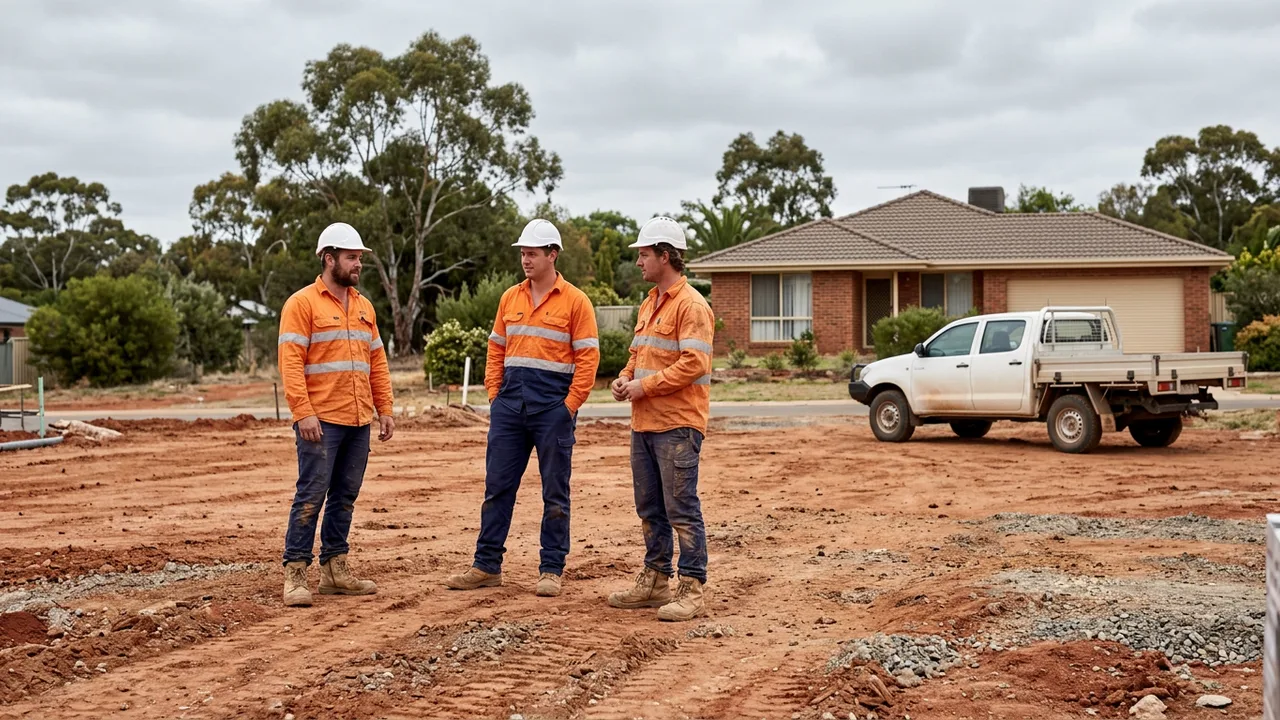
Earthmoving companies in Toowoomba: when the block is not ready
You are the person standing on a block that is not ready yet. Maybe the builder needs the house pad finished before the slab can go down. Maybe you have bought a block that falls away hard from the street. Maybe a shed has been ordered and there is nowhere flat to put it.
The same help suits the owner whose driveway washes out every time it storms. It also suits the one watching water pool against the house after rain. Some people just need a few days of digging done with the right size machine. Others have a plumber or electrician waiting on a trench across the yard. Some have heaps of soil and rubble left after a renovation.
If any of that sounds familiar, the next step is a Toowoomba earthworks contractor who looks at your block. You can ask how they handle the reactive clay and rock that turn up on the range.
The jobs people usually need done
Most earthworks jobs around Toowoomba fall into a few types. They range from a single shed pad to a long driveway on acreage. One contractor covers pads, footings, trenches, driveways, retaining wall cuts and spoil removal.
House and shed pads. The pad is cut into the slope, built up with fill, or both. Compaction matters as much as the level, because loose fill settles and cracks whatever is built on it.
Rubble and spoil removal. Old slabs, broken concrete, old fencing and dumped fill come out, and the dirt and rubble are carted off so you are not left with heaps in the yard.
Driveways and drainage. A driveway that holds up in wet weather is graded so storm water has somewhere to go other than down the middle of it. The same shaping keeps water running away from the house.
Retaining wall cuts. When a pad is cut into a slope, the wall holds the cut face so it does not slump. It needs drainage behind it so water pressure does not push it over. Taller walls can need an engineer's design.
If your yard only has a narrow side gate, a skid steer or compact excavator is usually the machine that fits.
How do you find an earthmover you can rely on?
Start with the QBCC register. Where the work needs a QBCC licence, you can search the register for the contractor's licence and history before you sign anything.
Next, get the price in writing. Queensland has a written contract rule for domestic building work above a set value, and that paper sets out what the work covers and what you pay.
Finally, look for a contractor who walks the access with you and sees where water sits after rain. A quote built on a look at your block fits the job better than one given over the phone.
What if the excavator cannot get in or hits rock?
Tight access is a fair worry on suburban jobs. Narrow side gates, steep driveways and fenced back yards often call for a smaller machine rather than a bigger one, and the operator picks the machine once they have seen the way in.
Rock and buried services are the other worry. Before digging, the contractor should find out where underground pipes and cables run, so they are located rather than found by the bucket. Rock slows the dig and needs different equipment. Reactive clay, which swells when wet and shrinks when dry, often needs extra cut or moisture conditioning before it is compacted.
A good quote lists the cut, the fill, the compaction and the carting away as separate items. A pad done correctly the first time is what stops the slab being held up.
Sloping blocks and pads on acreage
A sloping suburban block on the range is a different job from a paddock out on the Darling Downs. Every block falls its own way, so the first thing to settle is which direction your ground slopes and where the water goes after rain. On acreage, what sits under the topsoil shapes the work more than the address does.
A sloping suburban block usually means cutting a pad into the hill, holding the cut back with a retaining wall and giving storm water a clear path away. A tight yard might need a compact excavator and a careful hand.
On a flatter acreage block the work is a shed or house pad and a long driveway in from the road. Flat ground drains slowly, so the finished surface needs a gentle fall to a low corner or a table drain. Without it, water lies on the pad and softens the base.
Your next step
Tell the contractor what stands on the block now, what you want built and when the builder needs the ground ready. Mention which way the land slopes and how wide the entry is, because both shape the machine and the price.
When you are ready, use Request a Project Review and describe your block in a few lines.