
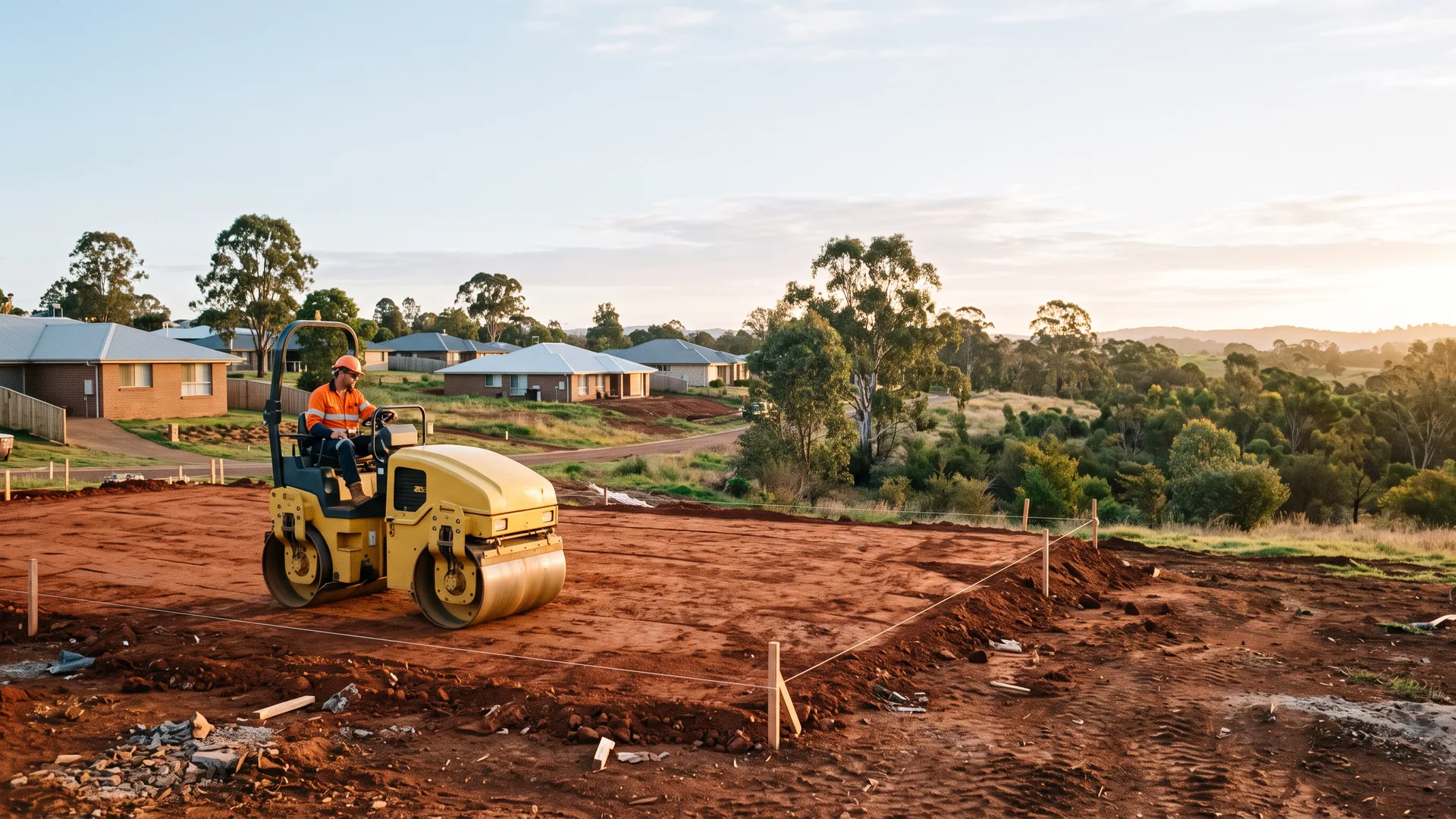
Earthworks Toowoomba for House Pads and Site Prep
Your builder is waiting on a pad, or the new block still falls away from the street. The ground needs to be cut, filled and compacted before the slab can go down. Request a Project Review.
Why a local contractor suits your block
Clay that turns to slop after rain is the first thing that can hold up a dig on your block.
- Dig days planned around the weather Wet clay clogs tracks and chews up a yard. A contractor plans dig days around the rain and chooses which side to cut first, so machines work from firm ground.
- A price in writing first Queensland requires a written contract for larger domestic building work, so you see what the job covers before the machines arrive.
- A licence you can look up You can search a contractor's licence on the QBCC register before you agree to anything, so you know who is working on your block.
- One quote for the whole dig Cut and fill, a driveway and a retaining wall cut are priced together, so you are not chasing three trades.
A Toowoomba earthworks contractor starts by reading how your block falls and what sits under the surface. A steep block needs a deeper cut and more spoil moved than a flatter one, so each block gets a look on site before the price is set. If your job moves a lot of soil, a larger excavator with a wide access path saves hours. A small one fits a narrow side gap but digs slowly. Rock under the topsoil is usually priced separately per cubic metre. Civwil.com.au lists a South East Queensland rock surcharge of $69 to $99 per m³ ex GST, as at October 2026. Clay that swells when wet and shrinks as it dries is why compaction matters on a sloping Toowoomba block, and why fill goes in thin layers on the low side of the cut.
Earthworks in Toowoomba: house pads and shed pads
A level, compacted house pad is the job most builders are waiting on. Cut and fill means digging out the high side and building up the low side. Clay fill is laid in thin layers and rolled at the right moisture, because fill that goes in too wet or too thick can keep settling after the slab is poured. Shed pads follow the same idea on a smaller scale. The shed's footprint and the way trucks reach it set the layout.
Before any shaping, the topsoil is usually stripped off, because soft, organic soil makes a poor base under a slab. The ground is then graded as part of site preparation, so rain runs away from where the slab will sit. Water pooling against a wall after rain usually points to fall in the wrong direction, though a look on site shows whether it is fall or a blocked drain.
A driveway that washes out in storms is a drainage problem before it is a surface problem. Water needs somewhere to go, and the base needs to be firm, before any new surface goes down. Spoil removal comes in when the soil dug out cannot all be used as fill on the same block. The extra is carted away, and that haulage and disposal lifts the price.
Block not level yet? Say how the block falls and when your builder needs the pad, then request a Project Review.
Get it priced
Block not level or ground in the way of your build? Tell us about the job and get it moving.
Share the details and we will help you take the next step with confidence.