
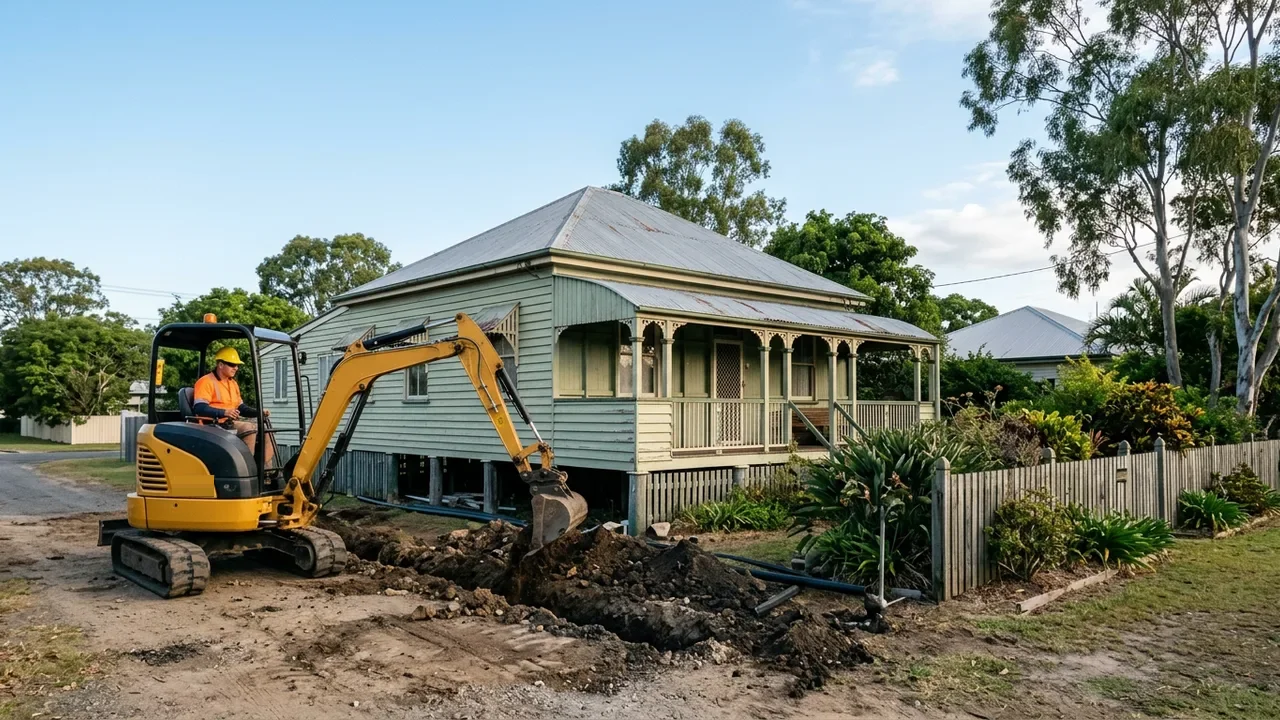
Earthworks in Wilsonton for Trenching and Site Works
Shed on order, builder waiting on a pad, or water running toward the back door? Get earthworks in Wilsonton dug, levelled or drained, with a clear written price before the machines arrive.
Three jobs cover most of the work here: trenching for pipes and cables, a level pad for a house or shed, or grading a block so water runs away from the building. One independent earthmoving contractor who works around Toowoomba can price these together. Before agreeing to regulated building work, look up the contractor's licence and the work it covers on the QBCC register.
Earthworks in Wilsonton, Toowoomba: how a site gets read
Every job starts with a walk over the block to see how the land falls.
A qualified operator looks at the slope and works out how much soil has to be cut away and how much has to be filled. Cut and fill means taking earth from the high side and building up the low side, with the extra carted off or kept for later use.
On a Wilsonton block the walk-over also covers the way in. An older house with a narrow side path calls for a different machine than a newer block with a wide frontage. The contractor confirms the scope on site and puts it in writing.
Trenching and underground services
A trench is a narrow, straight cut in the ground that carries water, sewer, stormwater, power or data lines to a house, shed or granny flat. Trenching is the digging and backfilling only. The licensed plumber or electrician does the pipe and cable work that the law reserves for them.
Underground services are the hard part of any dig. Pipes and cables already in the ground have to be located first, because a strike can cut off a neighbour's supply and cost a lot to repair. A good operator marks the route, digs to the depth the pipe needs and lays the bedding sand the plumber specifies.
Trench depth and width depend on what goes in it, so a drainage run for a driveway looks different from a power conduit to a shed. A straight line on paper often runs into a tree root, a slab edge or an old pipe, so the route usually gets settled once someone is standing in the yard.
Cut and fill for a flat, solid house or shed pad
A house pad is a flat, compacted platform that the slab sits on. Compacted means the fill has been rolled in layers until it stops settling. If the layers are skipped, the slab can crack or sink later, so this is the step worth getting right the first time.
A shed pad works the same way on a smaller scale. A shed ordered for a sloping yard needs a flat footprint, and the usual answer is to cut into the high side and build up the low side with compacted fill.
Once the pad is in, the ground around it gets shaped so water falls away from the walls and slab instead of pooling against them. Where a slope is steep enough that the soil could slide, a retaining wall holds the cut face and the contractor prices it with the pad.
Will rock or old pipes push the price up?
Rock and old pipes can add work, which is why the written scope matters. The price comes down to how much soil moves, how far it is carted, how hard the ground digs and whether the machine can reach the work, and the quote spells out each one.
Hard rock slows an excavator and may need a different bucket or attachment. Old pipes, buried slabs or fill from earlier building work add time.
The contractor will tell you where the risk sits and how a find would be handled, so everyone knows the plan.
What Wilsonton blocks bring to the job
Wilsonton is a post-war suburb a short drive north-west of the Toowoomba CBD. Its housing is mixed, and the mix changes what the ground and the access look like.
On a block with an older timber or post-war house, new service trenches may need to work around existing footings and tight side access. A smaller machine gets in where a full-size excavator cannot.
Brick housing from the 1970s and 1980s is prominent on the airport-side estates, near Airport Estate Park. A shed pad or drainage change in those backyards often means cutting near an existing slab edge, so the fall away from the walls gets set carefully.
Later development runs through the Fairview Heights side, home to Fairview Heights State School, where newer blocks tend to want pads and driveways.
Toowoomba City Aerodrome takes up the middle of the suburb, so spoil runs across Wilsonton can mean a longer haul around it. Distance is part of the price.
The industrial corner in the south-west sits between Taylor Street and Boundary Street. Hardstand there usually carries heavier vehicles than a home driveway, so the contractor sizes the road base to the load.
Shed pad, trench or drainage fix in Wilsonton? Type in what is going in, what stands there now and which way the yard falls, then use Request a Project Review.
Services in Wilsonton
- Driveway earthworks Driveways shaped, drained and laid with road base, gravel or bitumen so they stop washing out in storms.
- Retaining wall excavation The cut, set-out and drainage room behind concrete sleeper or sandstone block walls on sloping blocks.
- Trenching Trenches for stormwater, water and power dug to depth and line, with the yard around them left tidy.
- Swimming pool excavation Pool digs planned around machine access, rock and clay, with the spoil trucked off your property.
- Yard clean-up and spoil removal Leftover soil, rubble and spoil removed from the yard and carted off by tipper truck after the dig.
- House and shed pads Pads cut, filled and compacted to the levels your slab or shed needs, on suburban and rural blocks.
- Site preparation and levelling Topsoil stripping, rubble removal, cut and fill and grading take a block from rough ground to build-ready.
- Excavation and footings Footing and slab digs through local clay, rock and old fill, including blocks with tight side access.
Frequently Asked Questions
What licence is needed for earthworks and building work on a Wilsonton block?
Get it priced
Block not level or ground in the way of your build? Tell us about the job and get it moving.
Share the details and we will help you take the next step with confidence.